Where the Light Gets in Losing My Mother Only to Find Her Again by Kimberly Williams paisley
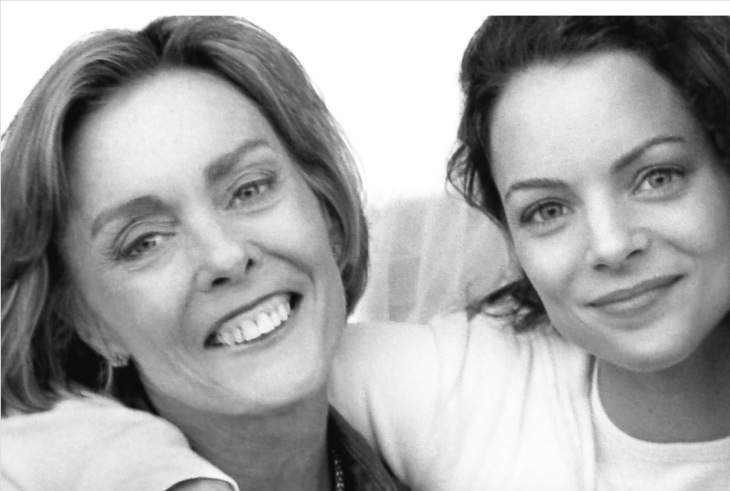
There are two beautiful faces and one famous proper noun on the cover of this book, simply please don't call up of it equally a "celebrity memoir." Instead, consider Kimberly Williams-Paisley'due south Where the Light Gets In a map to the unmappable: a aboveboard account of one family's experience through the nightmare of a parent's illness.
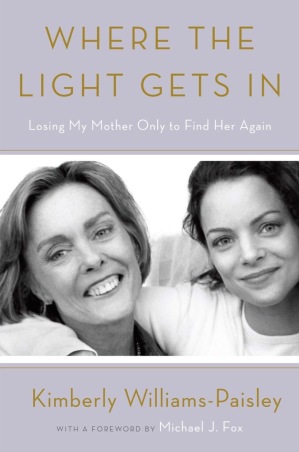
Williams-Paisley's mother, Linda Williams, was diagnosed at age 62 with main progressive aphasia, a rare class of dementia. In a cordial tone and clear prose (not surprising, given that she was raised by journalists) Williams-Paisley offers up the mistakes and discoveries her family made as they navigated this huge change to their family dynamic, infusing her story with funny anecdotes and brilliant moments that go along it engaging, fifty-fifty entertaining. Our booksellers love it. (It'southward Sissy's staff pick for April.)
As Ann Patchett wrote here recently, "Memoirs have a lot to teach us." What we learn from Where the Lite Gets In is this: "Over the years, there are a serial of arrivals and departures . . . the claiming is encouraging the people we love to go independent, and to dearest them as they are." For anyone caring for an ill or crumbling loved 1 — anyone who is part of a family unit at all, for that thing — that lesson comes every bit a tremendous gift.
In this interview with our editor, Mary Laura Philpott, Williams-Paisley discusses how she wrote the book and what she hopes it will attain. Meanwhile, we hope you'll make plans to join the states for the reading next Tuesday, April nineteen, at vi:15 at the Nashville Public Library.
 Tell me nearly the title.
KWP: It came to me one morning toward the cease of writing the volume. I'd gone over different titles, looking at things like "Riding the Storm," simply everything felt likewise dramatic. And then a woman named Nancy — of course you know who that is now, considering you run across her in the volume, merely she wasn't in the flick in the first — sent me a lyric from the Leonard Cohen vocal Canticle, which I loved:
Band the bells that still can ring
Forget your perfect offering
There is a crack in everything
That's how the calorie-free gets in.
I wrote information technology down and put it on my mirror, and I knew that was my anthem for this volume, where I'm showing all my warts and flaws. That idea of letting lite shine through the cracks, letting light in through the hard parts. It striking me i morning: this is the title.
How long did the volume take you to write?
KWP: About a year and a half. I started writing in July of 2014, and I only worked on information technology a few hours a day. Some days I took off.
Are you lot 1 of those people who can go upwardly super-early in the morning to write?
Noooooo. [laughs] Non a chip. Writing this volume was a wonderful job. I'm used to having to get on a plane to go to piece of work when I'm acting. When I was writing, I could see the kids in the morning, then walk the dogs, then get into my office for a couple of hours. So when I got stuck or when information technology was too hard, I could accept a break. I establish that giving myself a lot of air in the process helped everything percolate.
To what extent is writing in your comfort zone — or out of it?
KWP: I dearest writing! I started writing when I was eight years old. A family unit friend gave me a journal and I took right to it. I thought I was very important — I had a lot to write well-nigh. It was always a way for me to process and figure out what I thought. And I grew up in a family unit of writers; I was surrounded past it. Those were my favorite classes in school, too. I had multiple English teachers in high school who were fantastic, and then I took journalism classes at Medill School of Journalism at Northwestern. I ever toyed with dropping this acting thing and becoming a author.
You wrote in the volume that as the oldest in your family — the people pleaser and "parent pleaser" — yous had a different response when your mother first started showing signs of dementia than Jay and Ashley, your siblings, did.
KWP: I did not crumble under the pressure level, because I didn't allow myself to feel what was happening in the beginning. I approached it from a more applied bespeak of view. My sis approached it practically also, in that she did a lot of research, just she as well allowed herself to experience information technology. She's very emotional, and I admire that about her. Sometimes I worry I'm also closed-off emotionally. I also came at information technology with a heavy dose of denial.
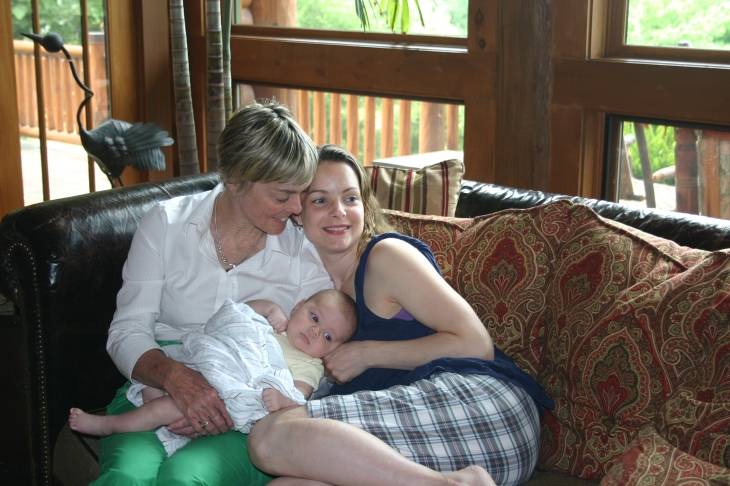
Between the fourth dimension when I first read the manuscript and now, photos take been added to the book. How did you choose those?
KWP: That was fun! I love the moving-picture show of my mom and me on the embrace. Initially, I had looked at using another i, merely it was besides potent and formal — it didn't really capture the essence of my mom. That picture that's on the cover at present is really her. The last pic in the book ever makes me gasp — I simply lose my jiff. Yous turn the terminal folio, and at that place's my mom, from backside, looking up, with her arms up in the air to the sky. She ever did that. I dearest that information technology got in there.
You had your sons as the early years of your mom'southward affliction were unfolding. Could you sense at the time the parallels between caring for your parents and caring for young children?
KWP: I could — and it was really disarming, considering I was trying to protect everybody. That's where being the oldest child actually kicked in. I was trying to juggle a lot of balls and protect my mom and protect my children, and protect my children from my mom, and trying to protect my female parent's pride. I could hardly breathe from all that pressure. It was exhausting and scary trying to gauge all the time what the adjacent movement was. My mother was so unpredictable. The kids were really more predictable than she was.
You write almost a moment when your mom almost dropped your babe son, and how your commencement gut reaction wasn't compassion or worry but acrimony at your mom. I appreciated that you were willing to show the reality of how frustrating it was for you, fifty-fifty though it was painful to think. Were at that place any stories that were too difficult to write nigh?
KWP: Well, it's more that I got to a indicate where I was like, OK, people aren't going to desire to hear another story of my mom walking naked down the hall or knocking things over and embarrassing herself. It's redundant. There are way more than stories than I included. Just that was part of the trick — cutting out what we didn't need and keeping in what's necessary and valuable.
You tell the story of how your parents made "parachute books" full of empowering mementos for you and your siblings when yous graduated and went out into the world, and how you brought that tradition dorsum for your mom and gave her a scrapbook showing her how loved she was when she got sick. Were there bodily books that served as "parachutes" for you during this experience? Things you read that you lot found peculiarly relatable or helpful?
KWP: That's a adept question. Honestly, a lot of information technology I couldn't tum. It took me a long time to read Still Alice . That was given to me early on, at a time when I couldn't handle it. I didn't want to visit those stories and so.
I definitely felt like we didn't have the roadmap I wanted. I can call up of a lot I've read since and so that would have been helpful. Like When Breath Becomes Air , which is so cute. And Being Mortal — which I wish had been written 10 years agone. Information technology has the questions you're supposed to inquire when someone gets sick, what yous're supposed to inquire your md. That would have helped usa so much.
Information technology seems like a little light broke through when you realized your mom had reached a point where she was truly living in the moment. Does it alleviate some of your own anxiety to know that she's not feeling the same kind of anticipatory fear you are?
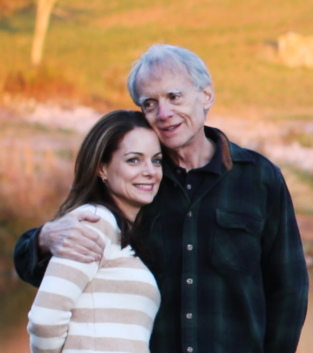
KWP: It does. I'm glad that she doesn't appear to be in physical pain. I do sense that there'southward an existential sort of hurting she feels. Only there'south so much I don't know, so I'm sort of embracing the mystery. What I imagine, what I get together from her doctors, is that she's having dream-like states where she'll take a wink of something happy, a flash of something scary, a flash of something sorry, a wink of acrimony — merely they're only flashes, and they're in the moment, so once they're gone, she's in another moment. That is somewhat of a relief. Merely there's so much unknown.
The resources section at the end was a bright improver.
KWP: That was my dad's idea. It came from conversations he had with the Alzheimer's Clan. Early on, he said, "There aren't a lot of books out there with this kind of story that also have a applied part." Nosotros wanted to requite people not only this narrative merely also this thing we didn't accept — a list of questions to ask and steps to accept and resources to consult. Non everyone will even wait at that section, but the people who need it will have it. And it's non just for people dealing with dementia. In that location are tons of caregivers out at that place.
Will y'all write more?
KWP: I would love to. I don't know what the story would exist next.
What else are you upward to these days, creatively?
KWP: I'm developing a Television receiver show for the Hallmark Channel, which is the fastest growing cablevision channel, and so that'southward fun. It's a family unit legal drama, and I'm working with a great author. I'm not writing that one though, just acting — I want to get back to that.
How do you lot like living in Nashville?
KWP: Nashville is a really fun place to be right now, don't you think? Brad and I have been married 13 years, and we knew each other a couple of years before that, so Nashville has been in my life for well-nigh xv years. It has inverse and then much in that time. Information technology always had the music, of course, but it didn't have the restaurant scene or quite this level of influx of people and culture and art. At that place's so much to come across and do. We simply went to the zoo — it was a blast. I love getting involved in the customs here. I find that I'one thousand really busy, in a good way. It's a great place to raise kids.
What practice y'all love about well-nigh the real-alive bookstore experience?
KWP: I beloved the aroma of books and bookstores.
People e'er say that.
KWP: It's true! You tin can't get that from your Kindle. I beloved going into bookstores and discovering something I never would accept known about earlier. I love taking my kids to bookstores. We've discovered some swell books at Parnassus and had some neat experiences considering of those books. Books have led us on journeys and led to other books. It's smashing, likewise, to have people who know what yous've read and what yous've liked who can say, "Well, if yous liked that, here are five other things you can read." I buy a lot of books.
* * *
 Where the Light Gets in: Losing My Mother Simply to Discover Her Again
Ticketing and book-signing details: This FREE, ticketed presentation is part of the Salon@615 series, offered to the public by a partnership of Parnassus Books, Humanities Tennessee, The Nashville Public Library and Foundation, and BookPage. Advance auditorium tickets are limited and guarantee a seat in the auditorium. A express number of auditorium tickets will as well be available on-site 30 minutes earlier showtime on the event date. We recommend arriving early on for the on-site ticket line. BONUS: A book signing volition be held later on the presentation for anyone who purchased a copy of this book from Parnassus Books! Copies will be available for purchase at the event. (As a Salon patron, yous will receive a 10% disbelieve!) Details here.
christensenmudis1966.blogspot.com
Source: https://parnassusmusing.net/2016/04/11/kimberly-williams-paisley-where-the-light-gets-in/
0 Response to "Where the Light Gets in Losing My Mother Only to Find Her Again by Kimberly Williams paisley"
Post a Comment